How South Florida HOAs Decide
In Broward and Palm Beach communities, permanent holiday lighting approvals usually come down to three things: how visible the system looks during the day, whether the color use can be controlled, and whether the installation matches the community’s architectural guidelines.
The review path depends on your HOA’s structure. Some communities send exterior changes to an Architectural Review Board (ARB/ARC), while others require a full board vote at a scheduled meeting. In practice, ARBs tend to focus on design consistency and “curb appeal,” while boards tend to focus on policy compliance and whether the request sets a precedent for future projects.
Local culture matters. Parkland and Weston communities often emphasize uniformity and a clean roofline. Boca Raton can be very documentation-driven and specific about exterior finishes. Coral Springs tends to be straightforward when the request is complete and the daytime appearance is subtle.
- Most HOAs evaluate daytime visibility first
- Color control and “no nuisance lighting” language is common
- ARB/ARC reviews are typically faster than board votes
- Expect at least one round of follow-up questions if the package is incomplete
Typical HOA Concerns to Address
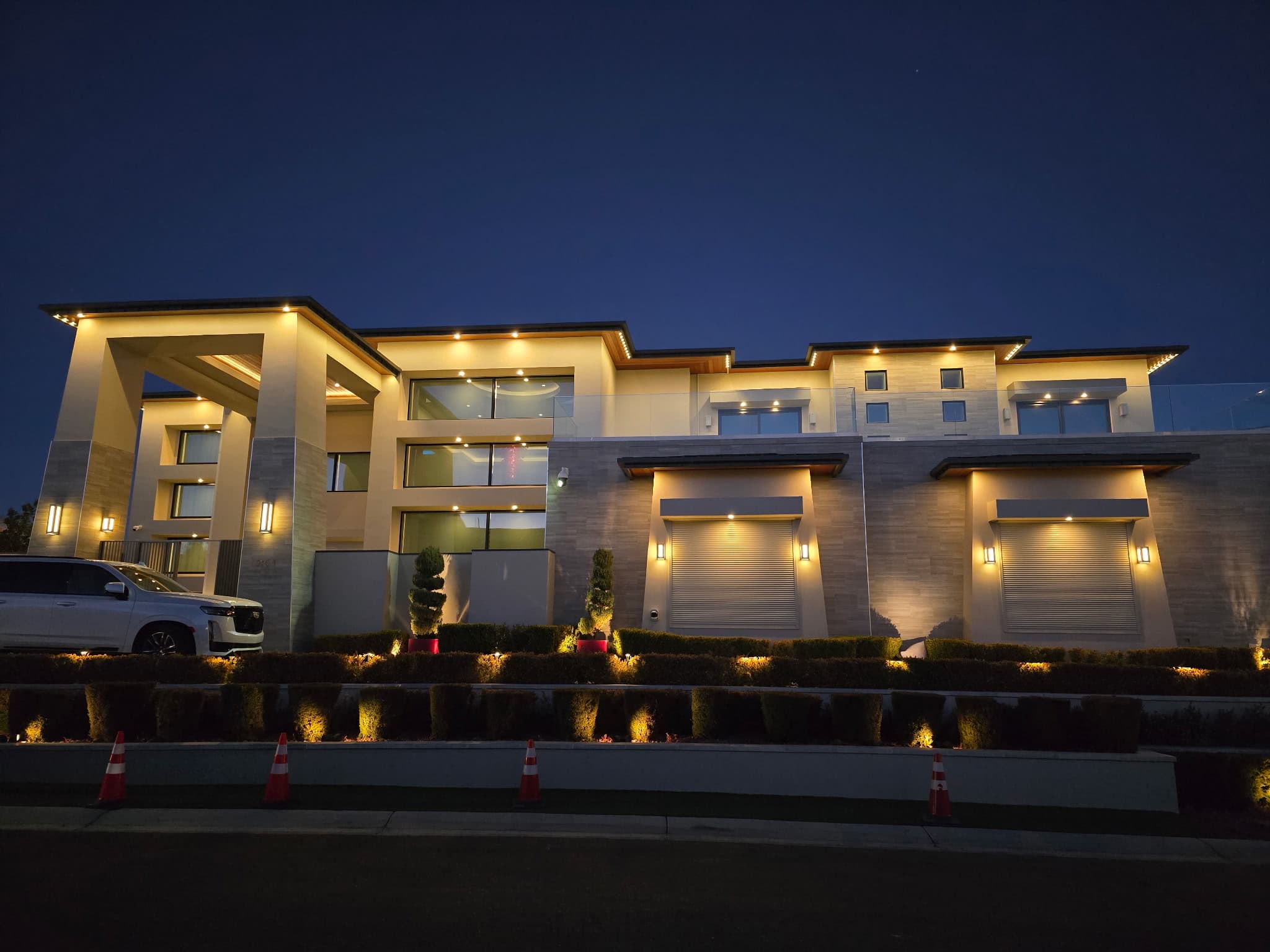
Daytime appearance is the #1 sticking point. HOAs want the track to blend into the fascia/soffit line and disappear from the street as much as possible. They’re also watching for anything that reads like a string-light look in daylight, especially in communities that prioritize a uniform facade.
Color control is the #2 concern. Many HOAs are fine with permanent outdoor lighting when there’s a clear default to warm white, with homeowner control for holidays and events. What they don’t want is bright, changing colors running every night, or lighting that creates glare for neighbors.
Finally, conformity with architectural guidelines. HOAs may ask whether the installation penetrates roof tiles, whether it impacts gutters, and whether it changes the “profile” of the home. The cleaner your plan is, the easier it is for an ARB to sign off.
- Track visibility by day from the street (front elevation matters most)
- Exact track color and how it matches fascia/trim
- Whether lights can be locked to warm white as a default
- No flashing/strobing or “nuisance” patterns
- Install method: mounting location, fastener type, and neat cable routing
- Separate scope for roofline and landscape lighting systems
Your HOA Approval Packet
Most delays happen because the HOA doesn’t have enough to review. A strong packet makes the decision easier: show what will be installed, where it goes, what it looks like during the day, and how it behaves at night.
Horizon Lighting FL helps homeowners build a clean submission package after the FREE in-home demo. We measure, bring a sample track and demo box, and turn the lights on directly on your home so you can see the output and so we can document the proposed look. That demo also helps answer the HOA’s core questions: visibility, color control, and consistency with the community’s aesthetic.
Include what your HOA asks for, plus the items below that typically resolve objections before they start.
- Product specification sheet for the permanent holiday lighting system
- Install photo mockup or rendering (front elevation and any visible side elevations)
- Written statement: default setting will be warm white (and how color changes will be managed)
- Track color selection (matched to fascia/soffit/trim where possible)
- Brief scope of work: mounting location, wire routing, controller location
- Confirmation of service scope: Permanent Holiday Lighting (signature), plus Architectural, Accent, Security, Holiday, and Event lighting; landscape lighting available separately
ARB vs Board: What Changes
If your community uses an ARB/ARC, the review is usually design-first. They’ll want to see the track finish, the placement relative to fascia, and a simple visual of what the home looks like in the daytime. A clear rendering and a spec sheet often get you most of the way there.
If your community requires a board vote, plan for a slower calendar. Board meetings are scheduled, agendas fill up, and approvals can be tabled if any detail is missing. Boards also tend to ask operational questions (hours of use, color limitations, “no nuisance” assurances) rather than just the aesthetics.
For Parkland, Weston, and many Boca neighborhoods, it helps to keep your request conservative: emphasize the subtle daytime look and the warm-white default. For Coral Springs communities, a complete packet and a clear statement of compliance typically keeps things moving.
- ARB/ARC: bring visuals (daytime look) and material/color detail
- Board vote: bring visuals plus rules-based assurances (default, hours, no glare)
- Ask your HOA: “Is this ARB-only, or does it require a board vote?”
- If your HOA has an architectural standards manual, cite the relevant section in your request
Timing for Holiday Installation
If you want your permanent Christmas lights installed for the holiday season, timing matters as much as approval. South Florida HOAs can take several weeks from submission to approval, especially if the board meets monthly or if the ARB requests revisions.
A practical rule: submit well before November. That gives time for questions, a second submission if needed, and scheduling once approval is in hand. It also avoids the end-of-year rush when many homeowners are trying to get on the calendar at the same time.
Once approved, Horizon Lighting FL handles the installation for premium residential homes across Broward and Palm Beach counties, including Parkland, Coral Springs, Boca Raton, Lighthouse Point, Southwest Ranches, Weston, Plantation, Davie, Delray Beach, Fort Lauderdale, Pompano Beach, and Hillsboro Beach. If you want to start with the in-home demo and measurements, call (754) 254-6158.
- Target submission: September or early October for a smooth runway
- Avoid waiting for “the next meeting” once November starts
- Keep a copy of the approval letter/email for your records
- Schedule the FREE in-home demo early so you can submit a complete packet