The short answer
Gemstone Lights and Trimlight are both professionally installed permanent lighting systems. The right choice is less about a universal winner and more about the exact product generation, local installer, daytime track appearance, control experience, and written service terms in the proposal.
Horizon Lighting FL installs TruLight rather than either brand. We are still happy to help a South Florida homeowner compare proposals honestly: bring the exact model, controller, warranty, and installation scope to the conversation, then judge the track on your own fascia before you commit.
- Compare the installed system and dealer, not only the brand name
- Ask which controller generation and app version are included
- Confirm the written parts, labor, and transfer terms before signing
- Use a live on-home demo to judge brightness, spacing, and daytime visibility
What the official materials confirm
Gemstone’s official app page describes support for Track, Flood, and Strip Lighting and distinguishes its newer Hub2 controller from the 2017–2024 Hub. Trimlight’s official site describes its patented channel design, Trimlight Edge app, factory-trained local dealers, and a lifetime product warranty on core components. Those statements come from the manufacturers; they are not a promise that every local proposal includes every feature.
The practical question for a homeowner is whether the quote names the hardware and terms clearly. A comparison page should never flatten changing product generations into one permanent specification.
- Gemstone: confirm whether the proposal uses the Hub or Hub2 controller
- Trimlight: confirm the current channel, Edge app, and warranty document
- Both: ask about zones, power/control placement, service access, and install finish
- Neither: assume a manufacturer headline replaces a local written proposal
Track, app, and everyday use
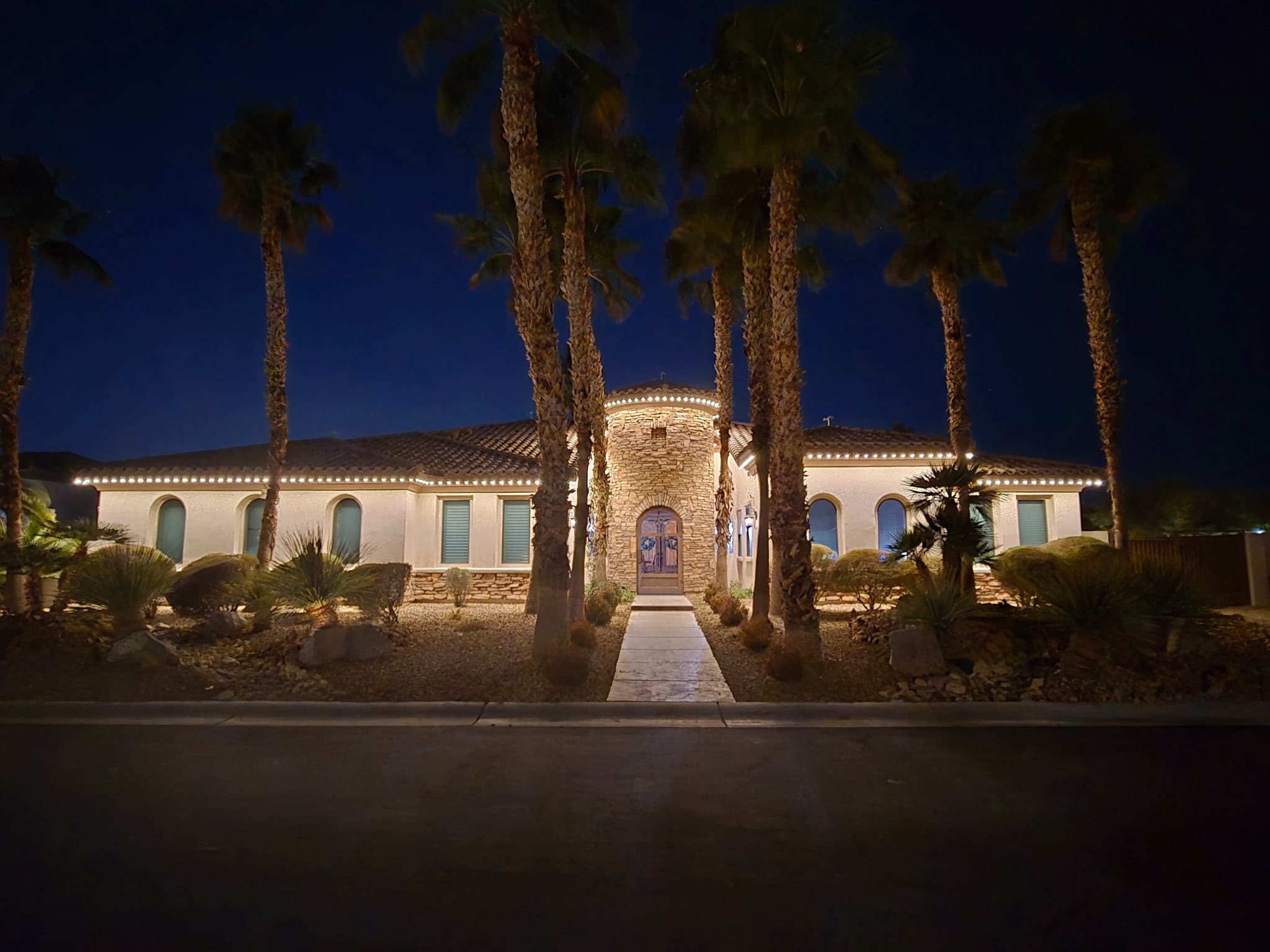
The system is part of the architecture when it is off and part of the home’s routine when it is on. Compare how each track sits beneath your eaves, how visible the lens and channel are from the street, and whether the app makes zones and schedules easy to manage.
Ask for the same demonstration from both installers: warm white at low brightness, a saturated holiday scene, a separate front-zone schedule, and a simple change made from the app. That turns vague feature language into a homeowner decision.
- Daytime: inspect the channel against your fascia, soffit, stucco, or trim
- Nighttime: look for consistent spacing, glare, color uniformity, and dark gaps
- Control: test zones, scenes, schedules, brightness, and household sharing
- Service: ask where controllers and power components live and how they are reached
How to compare two proposals
A useful comparison has the same measurement on both sides: linear footage, elevations, corners, peaks, returns, zones, controller location, power plan, mounting method, cleanup, app setup, and warranty coverage. A low price can simply mean a smaller outline, fewer zones, less service coverage, or a different finish standard.
For a South Florida home, ask how the installer plans for heat, rain, salt air, roof access, and future service. Horizon’s free in-home demo is built around that same principle: measure the actual home, show the track and lighting result on the actual architecture, and make the scope legible before a decision.
- Compare the same roofline scope and linear footage
- Compare the same controller, zones, and power requirements
- Read the manufacturer warranty and installer workmanship terms separately
- Ask what happens if a section fails or the property changes hands